
Swimming pool accidents can happen without warning, and when they do, the consequences are often serious. Whether an injury occurred at a private backyard pool, a community recreation center, a hotel, or a public aquatic facility, victims and their families have a right to understand who is responsible and what legal options are available to them. Pennsylvania premises liability law provides meaningful protections for those harmed by negligent pool owners, operators, and equipment manufacturers.
At Shenderovich, Shenderovich & Fishman, P.C., our Pittsburgh swimming pool accident lawyers represent injury victims and grieving families throughout the greater Pittsburgh area and across Pennsylvania. If you or someone you love was hurt in a pool accident, call us today at (412) 391-7610 for a free consultation.
Common Types of Swimming Pool Accidents in Pittsburgh
Pool accidents take many different forms, and the legal theories that apply can vary significantly depending on how an injury occurred. Understanding the most common accident types helps victims identify what may have gone wrong and who may bear responsibility.
Drowning and Near-Drowning Accidents
Drowning is one of the leading causes of accidental death in the United States, and near-drowning events can result in permanent brain damage, organ failure, and long-term disability. Pool owners and operators have a duty to maintain adequate supervision, proper safety equipment, and appropriate barriers to prevent access by young children or non-swimmers.
Slip and Fall Injuries Around Pool Areas
Wet surfaces surrounding a pool create obvious hazards. When pool decks, ladders, diving board platforms, or locker room floors are not properly maintained, drained, or surfaced with slip-resistant materials, falls can result in fractures, head injuries, and spinal trauma. Property owners are required to keep common areas in a reasonably safe condition.
Diving Accidents and Shallow Water Injuries
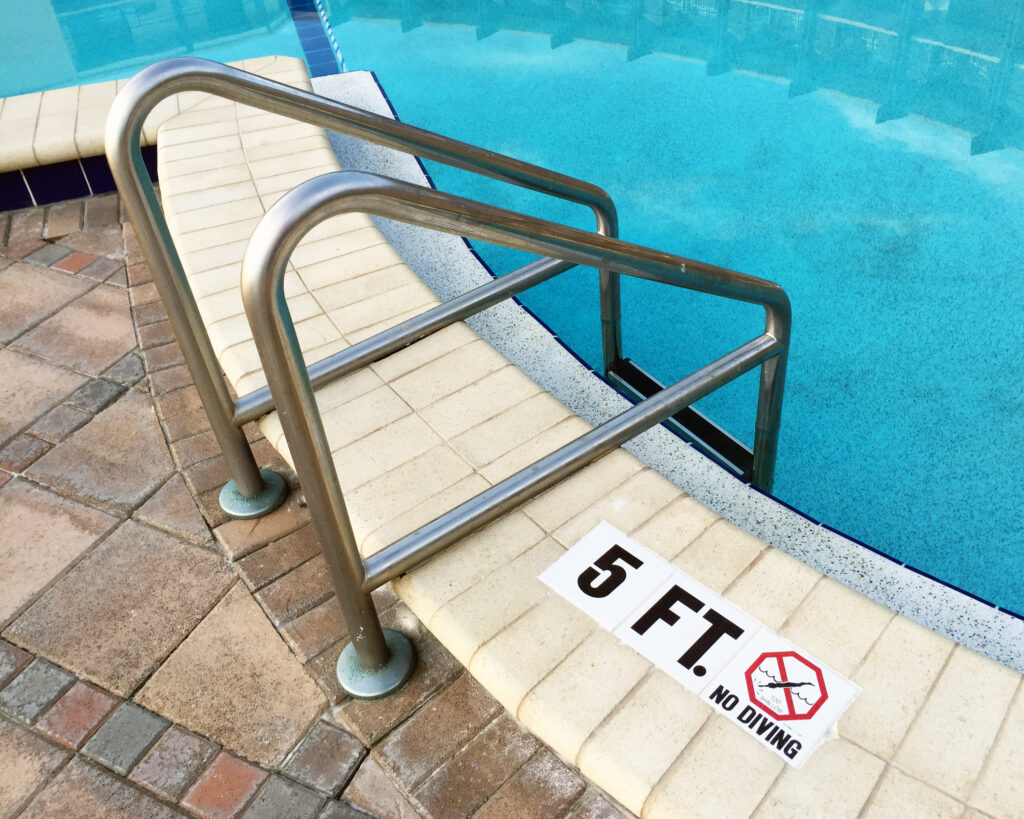
Diving into water that is too shallow, or into an area that is not designated or safe for diving, is a leading cause of catastrophic spinal cord injury. When a pool lacks adequate depth markings, warning signage, or appropriate supervision, and a diver suffers a neck or spinal injury as a result, the property owner or operator may bear significant liability.
Drain Entrapment Accidents
Suction entrapment occurs when a swimmer's body, hair, or clothing becomes trapped against a pool drain that lacks proper covers or anti-entrapment devices. These accidents can result in drowning, evisceration, or severe traumatic injury within seconds. Federal law specifically addresses this risk, and failures to comply can support both personal injury and wrongful death claims.
Chemical Exposure and Water Quality Injuries
Pools require careful chemical balance to protect swimmers from bacterial infections and waterborne illness. Improper chlorination, chemical contamination, or failure to test and treat water regularly can cause eye and skin injuries, respiratory damage, and serious infections. Exposure to improperly stored or handled pool chemicals can also result in burns or toxic inhalation injuries.
Defective Pool Equipment Injuries
Pool equipment failures, including defective drain covers, malfunctioning pool lifts, broken ladders, or faulty filtration systems, may give rise to a product liability claim against the manufacturer, distributor, or installer in addition to a premises liability claim against the property owner.
Injuries Caused by Swimming Pool Accidents
The injuries that result from pool accidents range from minor to catastrophic. Victims commonly suffer:
- Traumatic brain injury from submersion or impact
- Spinal cord injury and paralysis from diving accidents or falls
- Broken bones and fractures
- Lacerations from broken or defective equipment
- Near-drowning related anoxic brain damage
- Chemical burns to the eyes, skin, or respiratory tract
- Infections from contaminated water, including E. coli or Pseudomonas
- Emotional trauma and post-traumatic stress disorder, particularly in children and families who witnessed a drowning event
Catastrophic injuries often require long-term medical care, rehabilitation, adaptive equipment, and significant life adjustments that must be accounted for in any legal claim.
Who Is Liable for a Swimming Pool Accident in Pennsylvania?
Pennsylvania premises liability law requires property owners to maintain their property in a reasonably safe condition for lawful visitors. When a pool accident occurs, liability may extend to one or more parties, including:
- Private homeowners who failed to maintain a safe pool environment or restrict access
- Apartment complexes or HOAs that operate community pool facilities
- Hotels, resorts, or vacation rental owners
- Municipalities or public entities operating public pools and aquatic centers
- Country clubs, gyms, or fitness facilities
- Schools or youth organizations operating pool programs
- Pool maintenance companies that performed negligent service
- Equipment manufacturers whose defective products contributed to the injury
Identifying all liable parties is one of the most important early steps in a swimming pool accident case, and it is something our attorneys prioritize from the outset of every representation.
Pennsylvania Swimming Pool Safety Laws and Regulations
Pennsylvania and its local jurisdictions impose specific legal requirements on pool owners and operators. Violations of these requirements can be powerful evidence of negligence in a personal injury case.
Residential Pool Fencing and Barrier Requirements
Pennsylvania law requires residential swimming pools to be enclosed by a fence or barrier at least 4 feet high that prevents unsupervised access by young children. Key specifications include:
- Self-closing, self-latching gates that swing away from the pool and latch at least 54 inches above ground.
- Non-climbable materials with no gaps larger than 4 inches (vertical slats no more than 1¾ inches apart).
- No handholds or footholds for climbing.
When homeowners fail to install or maintain compliant barriers, a child may unknowingly access the pool and suffer injury. This negligence directly supports liability claims for drowning, entrapment, or trauma.
The Virginia Graeme Baker Pool and Spa Safety Act
This federal law, enacted in 2007, requires that public pools and spas be equipped with anti-entrapment drain covers that meet specific safety standards. The law was passed following the drowning death of the granddaughter of former Secretary of State James Baker, who became entrapped in a pool drain. Facilities that fail to install compliant drain covers are in violation of federal law, and that violation is directly relevant in any entrapment injury or drowning case.
Public Pool Safety Standards in Allegheny County
The Pennsylvania Department of Health (PADOH) regulates public swimming pools and bathing places under 28 Pa. Code Chapter 18 (Public Swimming and Bathing Places).
Key provisions include:
- Water Quality: Free chlorine minimum 0.4 ppm (no maximum specified, but >10 ppm may require closure); pH 7.2–8.2; weekly bacterial testing.
- Bather Load Limits: Defined by surface area (e.g., 10 sq ft per bather <5 ft depth; 25 sq ft >5 ft; 15 sq ft spas).
- Lifeguard Staffing: At least two lifeguards for general public pools; one for restricted events.
- Facility Safety: Depth markers, rescue equipment (ring buoys, throw lines), non-slip surfaces, hazard reduction.
These ensure public health through proper design, operation, and maintenance.
Swimming Pool Accidents Involving Children
Children face disproportionate risk from swimming pool accidents and can drown in minutes, even in just a few inches of water.
Pennsylvania applies the attractive nuisance doctrine to child trespassers. This holds property owners liable for injuries from unfenced pools or similar hazards likely to attract children, even without permission, if owners knew (or should have known) of the risk.
When a child is injured at a neighbor's or family member's pool, parents often feel uncertain about legal options. Homeowners insurance typically covers these claims, so families aren't suing individuals out-of-pocket. An attorney at Shenderovich, Shenderovich & Fishman, P.C. can explain the claims process and practical realities before any decisions are made.
What to Do After a Swimming Pool Accident in Pittsburgh
The steps taken immediately after a pool accident can have a meaningful impact on the outcome of a legal claim. If you or a loved one have been injured, consider taking the following actions:
- Seek emergency medical attention immediately, even if injuries do not appear severe at first.
- Report the accident to the pool owner, manager, or facility operator and request a written incident report.
- Document the scene by photographing the pool area, any defective equipment, lack of signage, or hazardous conditions.
- Gather contact information from witnesses who saw the accident occur.
- Preserve any physical evidence, including wet clothing or defective equipment.
- Avoid giving recorded statements to insurance adjusters before speaking with an attorney.
- Contact a Pittsburgh swimming pool accident lawyer at (412) 391-7610 as soon as possible to protect your rights.
Compensation Available for Swimming Pool Accident Victims
Victims of swimming pool accidents in Pennsylvania may be entitled to recover compensation for a wide range of losses, including:
- Current and future medical expenses, including hospitalization, surgery, rehabilitation, and ongoing treatment
- Lost wages and reduced future earning capacity
- Pain and suffering
- Emotional distress and psychological trauma
- Loss of enjoyment of life
- Wrongful death damages in cases where the victim did not survive
The full value of a claim depends on the severity of the injury, the clarity of liability, the availability of applicable insurance coverage, and the long-term impact on the victim's life and ability to work and function. Our attorneys work with medical professionals, life care planners, and economic experts to build comprehensive damages cases for our clients.
Pennsylvania Statute of Limitations for Swimming Pool Accident Claims
Pennsylvania generally requires that personal injury claims be filed within two years of the date of the accident.
For wrongful death claims, the same two-year period typically applies, running from the date of death. There are limited exceptions, including for minors, where the statute may be tolled until the child turns 18.
However, waiting to consult an attorney is never advisable, as evidence can be lost and witnesses become harder to locate over time. If you believe you have a claim, speaking with a lawyer promptly is the most important thing you can do to protect your options.
Why Choose Shenderovich, Shenderovich & Fishman, P.C. for Your Swimming Pool Accident Case
Shenderovich, Shenderovich & Fishman P.C. has built its reputation on standing up for injury victims across Pittsburgh and Pennsylvania. Our attorneys understand how to investigate complex premises liability cases, identify all available sources of recovery, and go up against insurance companies and large property owners who would rather minimize or deny a valid claim. Learn more about our firm and the commitment we bring to every client we serve, then call us at (412) 391-7610 to discuss your personal injury or premises liability claim.
We handle swimming pool accident cases on a contingency fee basis, which means there is no cost to you unless we recover compensation on your behalf. From your first call to the resolution of your case, our team is with you every step of the way.
Contact Our Pittsburgh Swimming Pool Accident Lawyers Today
If you or a family member was injured in a swimming pool accident in Pittsburgh or anywhere in Pennsylvania, do not wait to get the legal help you need. Contact Shenderovich, Shenderovich & Fishman, P.C. today at (412) 391-7610 to schedule your free consultation. Our Pittsburgh swimming pool accident lawyers are ready to listen, evaluate your case, and help you understand your options with no obligation to proceed.
Swimming Pool Accident FAQs
Can I still file a claim if I signed a liability waiver at the pool?
Possibly. Liability waivers are not automatically enforceable under Pennsylvania law, particularly when the injured party is a minor, when the waiver was not clearly presented or explained, or when the negligence involved a violation of a statute or public safety regulation. An attorney can review the specific language of any waiver and advise whether it is likely to hold up in your circumstances.
How long do I have to file a swimming pool accident lawsuit in Pennsylvania?
In most cases, Pennsylvania's two-year statute of limitations applies. This means you generally have two years from the date of the accident to file a lawsuit. There are exceptions, including for minors and in cases where injuries were not immediately apparent. Speaking with an attorney early ensures you do not lose your right to pursue a claim due to a missed deadline.
Who is responsible if my child was injured at a neighbor's pool?
Your neighbor's homeowners insurance policy may cover the incident, and the neighbor may be personally liable for failing to maintain a safe pool environment or comply with applicable fencing and barrier requirements. Pennsylvania's attractive nuisance doctrine may also apply even if your child entered the property without permission. An attorney can help you evaluate the claim without necessarily disrupting your personal relationship with your neighbor.
What if I was partially at fault for my swimming pool injury?
Pennsylvania follows a modified comparative negligence rule. This means that as long as you were not more than 50% at fault for the accident, you can still recover compensation. However, your recovery will be reduced by your percentage of fault. For example, if you were found 20% at fault and your damages totaled $100,000, you would recover $80,000. An experienced attorney can help minimize arguments about comparative fault and ensure your claim is evaluated fairly.